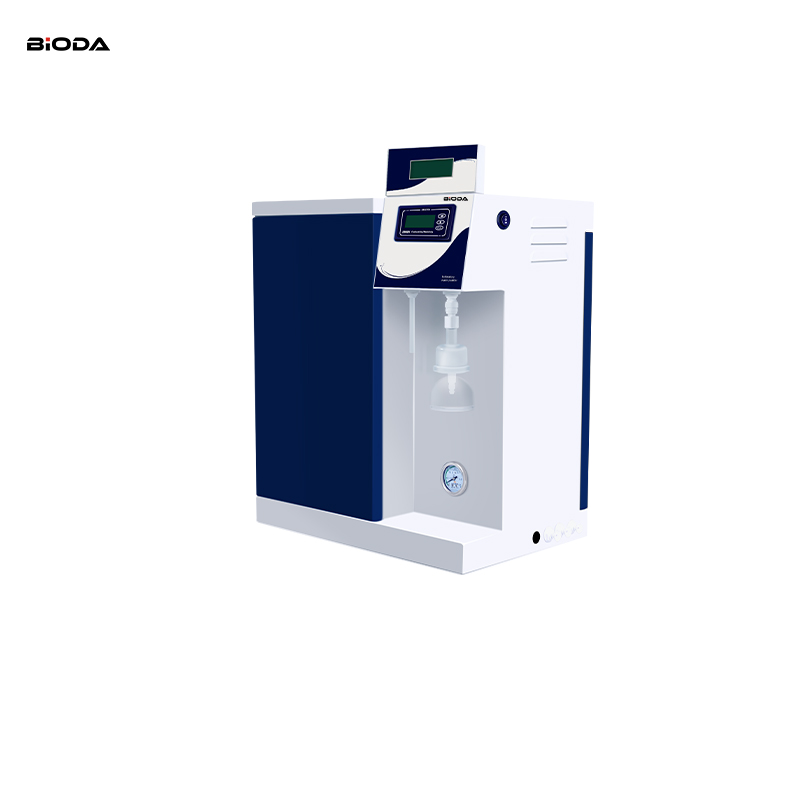

In modern laboratories, water is more than just a basic resource—it is a critical reagent that directly affects the accuracy, reliability, and reproducibility of experimental results. For many scientific applications, ordinary tap water or even distilled water cannot meet the required purity standards. This is where ultrapure water becomes indispensable.
From analytical chemistry and molecular biology to pharmaceutical research and semiconductor manufacturing, ultrapure water plays a vital role in ensuring precise and contamination-free experiments.
What Is Ultrapure Water?
Ultrapure water is highly purified water that has had almost all dissolved salts, organic compounds, microorganisms, particles, and dissolved gases removed through advanced purification technologies.
Compared with ordinary purified water, ultrapure water offers significantly higher purity and is suitable for laboratories that require extremely low levels of contaminants.
Modern ultrapure water systems typically combine several purification technologies, including:
Reverse Osmosis (RO)
Ion Exchange (DI)
Activated Carbon Filtration
Ultraviolet (UV) Sterilization
Ultrafiltration (UF)
Final Microporous Filtration
The result is water with extremely low conductivity and minimal organic contamination, making it suitable for high-precision laboratory applications.
Why Is Ultrapure Water Important?
Even trace amounts of impurities can influence laboratory results.
Using water that contains ions, microorganisms, or organic contaminants may lead to:
Inaccurate analytical results
Instrument contamination
Reduced experiment reproducibility
Sample interference
Increased maintenance costs
Ultrapure water helps eliminate these risks by providing a stable and reliable water source.
Main Advantages of Ultrapure Water
1. Improves Experimental Accuracy
Ultrapure water minimizes contamination that could interfere with sensitive analytical instruments and laboratory procedures.
This is particularly important for:
HPLC
ICP-OES
ICP-MS
GC-MS
UV-Vis Spectrophotometers
Stable water quality ensures more reliable analytical data.
2. Protects Laboratory Instruments
Minerals and dissolved salts can accumulate inside laboratory equipment, reducing efficiency and shortening service life.
Using ultrapure water helps prevent:
Scale formation
Corrosion
Blocked pipelines
Sensor contamination
This reduces maintenance frequency and lowers operating costs.
3. Enhances Experimental Reproducibility
Consistent water quality is essential for obtaining repeatable experimental results.
Researchers performing long-term projects can confidently reproduce experiments using the same high-quality water source.
4. Reduces Biological Contamination
Ultrapure water systems equipped with UV sterilization and ultrafiltration effectively reduce bacteria, endotoxins, and microorganisms.
This is especially important for:
Cell culture
Molecular biology
Microbiology
Pharmaceutical laboratories
Applications of Ultrapure Water
Ultrapure water is widely used across numerous industries and research fields.
Analytical Laboratories
Preparation of reagents and standards
Instrument cleaning
Sample dilution
Pharmaceutical Industry
Drug research
Quality control
Injection preparation
Cleaning pharmaceutical equipment
Biotechnology
DNA extraction
PCR experiments
Protein purification
Cell culture preparation
Environmental Testing
Water quality analysis
COD analysis
Heavy metal determination
Environmental monitoring
Educational and Research Institutions
Teaching laboratories
Scientific research
Experimental preparation
General laboratory applications
Practical Case
An environmental testing laboratory was experiencing inconsistent trace metal analysis due to impurities in the laboratory water supply.
After replacing its conventional purified water source with an ultrapure water system, the laboratory observed:
Improved instrument stability
Lower background interference
More accurate analytical results
Reduced maintenance requirements
Better repeatability across multiple testing batches
The laboratory also extended the service life of several analytical instruments by reducing mineral deposits and contamination.
How to Choose an Ultrapure Water System
When selecting a laboratory water purification system, consider the following factors:
Water Quality Requirements
Different applications require different water purity levels.
Determine whether purified water, ultrapure water, or both are needed.
Daily Water Consumption
Select a system with sufficient production capacity for your laboratory's daily workload.
Purification Technology
A high-quality system should integrate multiple purification stages to ensure stable water quality.
Monitoring Functions
Modern systems provide real-time monitoring of:
Resistivity
Conductivity
Water quality status
Filter life
These features simplify operation and maintenance.
Maintenance Convenience
Choose equipment with easily replaceable purification cartridges and user-friendly maintenance procedures.
Conclusion
Ultrapure water is one of the most important resources in modern laboratories. Its exceptional purity helps improve analytical accuracy, protect sensitive instruments, reduce contamination risks, and ensure reliable scientific results.
Whether used in pharmaceutical research, environmental analysis, biotechnology, or academic laboratories, investing in a reliable ultrapure water purification system can significantly improve laboratory efficiency and long-term operating performance.
As laboratory standards continue to advance, ultrapure water systems will remain essential equipment for achieving high-quality scientific research and precise analytical testing.