
In chemical laboratories, pharmaceutical research facilities, and biotechnology applications, solvent evaporation is one of the most frequently performed processes. However, traditional evaporation methods often lead to low efficiency, sample loss, and inconsistent results.
A rotary evaporator has become one of the most effective solutions for rapid solvent removal, concentration, and recovery. This article explores common evaporation challenges and how modern rotary evaporators help laboratories improve productivity and reliability.
Why Is Solvent Evaporation Important?
Many laboratory procedures require the removal of solvents after extraction, synthesis, purification, or sample preparation.
Common applications include:
Chemical synthesis
Plant extraction
Pharmaceutical research
Essential oil concentration
Organic solvent recovery
Food and beverage analysis
Without proper evaporation equipment, these processes can become slow and inefficient.
Problem 1: Long Evaporation Time
Challenge
Traditional heating methods often require several hours to remove solvents, especially when processing large sample volumes.
This slows down laboratory workflows and reduces productivity.
Solution
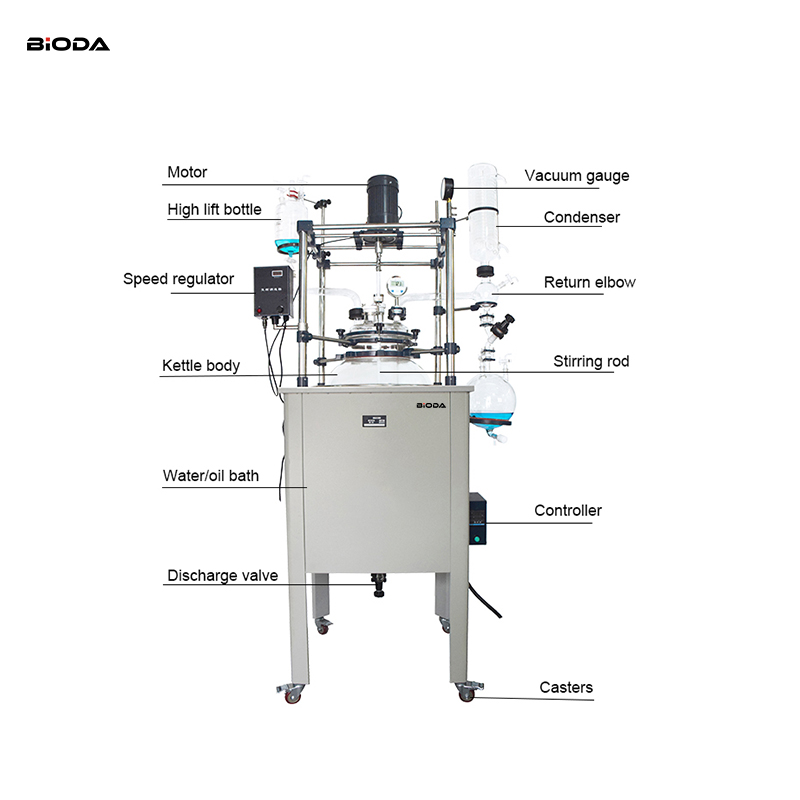
A rotary evaporator combines:
Rotating evaporation flask
Controlled heating bath
Vacuum system
Efficient condenser
The rotating motion continuously increases the evaporation surface area, significantly accelerating solvent removal.
As a result, laboratories can complete concentration procedures much faster than conventional evaporation methods.
Problem 2: Heat-Sensitive Samples Become Damaged
Challenge
Many biological compounds, natural extracts, and pharmaceutical ingredients are sensitive to high temperatures.
Direct heating can cause:
Degradation of active compounds
Reduced product quality
Loss of valuable samples
Solution
Rotary evaporators operate under reduced pressure conditions.
Lower pressure reduces the boiling point of solvents, allowing evaporation at lower temperatures.
This protects temperature-sensitive materials while maintaining high evaporation efficiency.
Problem 3: Solvent Waste and Environmental Concerns
Challenge
In many laboratories, valuable solvents are lost during evaporation, increasing operational costs and environmental impact.
Solution
The condenser system captures evaporated solvents and collects them in a receiving flask.
Benefits include:
Solvent recovery
Reduced waste
Lower operating costs
Improved environmental sustainability
This is particularly important for expensive organic solvents used in research and production.
Problem 4: Inconsistent Concentration Results
Challenge
Manual evaporation methods often produce inconsistent concentrations due to uncontrolled heating conditions.
This can affect:
Analytical accuracy
Experimental reproducibility
Product quality
Solution
Modern rotary evaporators provide:
Adjustable rotation speed
Accurate temperature control
Stable vacuum conditions
These features help ensure consistent and repeatable concentration results.
Problem 5: Processing Large Sample Volumes
Challenge
Research institutions and production laboratories frequently need to process large quantities of solvent.
Conventional equipment may not provide sufficient capacity.
Solution
Industrial rotary evaporators are available in multiple capacities, including 10L, 20L, 30L, and 50L evaporation flasks, making them suitable for both laboratory and pilot-scale applications.
This flexibility allows laboratories to select the appropriate system based on production requirements.
Real Application Case
A natural plant extraction laboratory needed to concentrate botanical extracts after ethanol extraction.
Previously, technicians used conventional heating methods that required several hours and resulted in partial loss of volatile compounds.
After implementing a rotary evaporator system:
Concentration time was reduced significantly
Solvent recovery improved
Product quality became more consistent
Laboratory productivity increased
The laboratory was able to process more samples while maintaining the integrity of valuable plant extracts.
Key Features to Consider When Choosing a Rotary Evaporator
When selecting a rotary evaporator, consider:
Flask Capacity
Choose the appropriate size based on sample volume requirements.
Vacuum Performance
A stable vacuum improves evaporation efficiency and protects sensitive compounds.
Temperature Control Accuracy
Precise heating helps maintain product quality.
Rotation Speed Range
Adjustable speed provides flexibility for different solvents and applications.
Condenser Efficiency
An efficient condenser improves solvent recovery and reduces operating costs.
Conclusion
Rotary evaporators have become essential instruments in modern laboratories for solvent evaporation, concentration, extraction, and recovery.
By solving common problems such as slow evaporation, heat damage, solvent waste, and inconsistent results, these systems help laboratories improve efficiency, reduce costs, and achieve reliable outcomes.
Whether used in chemistry, pharmaceuticals, biotechnology, or natural product extraction, a high-quality rotary evaporator is a valuable investment for any laboratory seeking higher productivity and better process control.