
In modern environmental monitoring, wastewater analysis, and laboratory testing, sample pretreatment is a critical step that directly affects the accuracy of analytical results. Among the various pretreatment technologies available today, intelligent digesters have become indispensable laboratory instruments for COD, Total Phosphorus (TP), and Total Nitrogen (TN) analysis.
With the development of automation and smart laboratory technologies, intelligent digesters are helping laboratories improve efficiency, reduce human error, and achieve more reliable testing results.
What Is an Intelligent Digester?
An intelligent digester is a laboratory instrument designed to heat and digest water samples under controlled temperature and timing conditions before chemical analysis.
Many environmental parameters cannot be measured directly and require a digestion process to convert substances into measurable forms. The digested sample can then be analyzed using spectrophotometers or other analytical instruments.
Intelligent digesters are widely used in:
Environmental monitoring laboratories
Wastewater treatment plants
Municipal water testing centers
Industrial quality control laboratories
Universities and research institutions
By automating the digestion process, these instruments help ensure consistency and improve laboratory productivity.
Why Is Sample Digestion Important?
Before testing certain water quality parameters, samples often contain complex compounds that must be broken down through heating and chemical reactions.
Without proper digestion:
Analytical results may be inaccurate
Testing reproducibility may decrease
Regulatory compliance may be affected
A standardized digestion process ensures that samples are prepared correctly and that laboratory results remain reliable and comparable.
Key Applications of Intelligent Digesters
1. COD Analysis
Chemical Oxygen Demand (COD) is one of the most important indicators of water pollution.
Intelligent digesters provide precise temperature control required for COD digestion, ensuring complete oxidation of organic matter before analysis.
2. Total Phosphorus Testing
Total phosphorus measurement requires digestion to convert all phosphorus compounds into measurable forms.
Accurate digestion improves the reliability of environmental monitoring and wastewater treatment assessments.
3. Total Nitrogen Analysis
Nitrogen compounds in water samples often require digestion before laboratory measurement.
A controlled digestion process helps achieve accurate and repeatable results.
4. Environmental Water Quality Monitoring
Environmental laboratories routinely use digesters for:
Surface water analysis
Groundwater monitoring
Industrial wastewater testing
Municipal wastewater compliance testing
Advantages of Modern Intelligent Digesters
Intelligent Touchscreen Operation
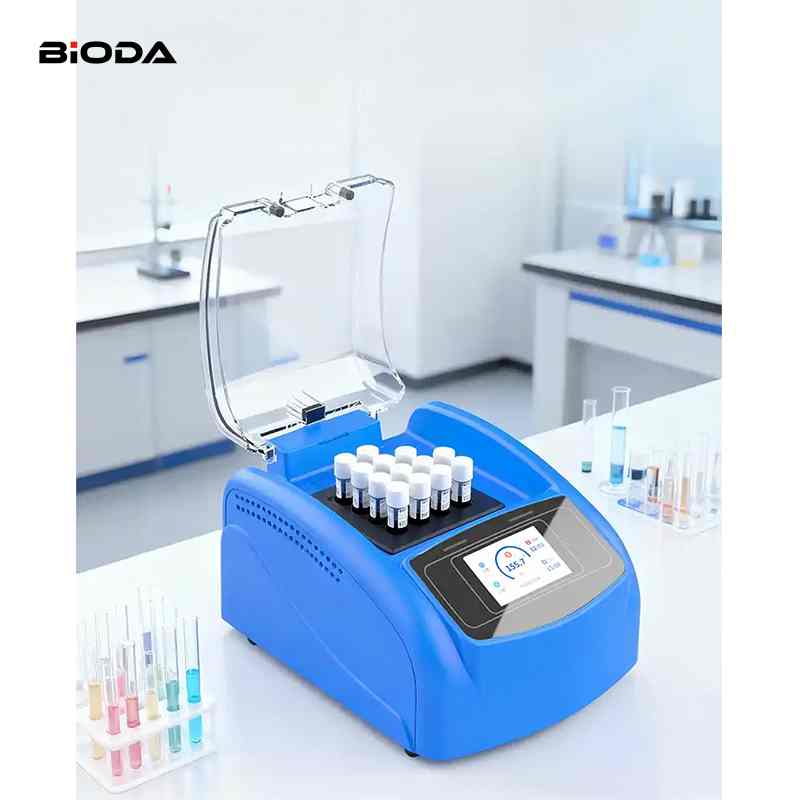
The LH-A116 intelligent digester features a 3.5-inch color touchscreen that provides a user-friendly operating experience.
Temperature, time, and digestion programs can be easily selected and monitored through an intuitive interface.
Multiple Pre-Stored Digestion Programs
With 21 built-in digestion modes, operators can quickly choose the appropriate program for different testing requirements.
This reduces setup time and minimizes operational errors.
Fast Heating Performance
The instrument can heat from room temperature to 165°C within approximately 10 minutes, significantly improving laboratory efficiency.
Fast heating shortens sample preparation time and increases daily testing capacity.
High Temperature Accuracy
Precise temperature control is essential for digestion consistency.
The LH-A116 provides temperature accuracy of ±0.5°C, helping ensure stable and reproducible digestion results.
Voice Prompt Function
Built-in voice guidance improves user convenience and helps operators monitor the digestion process more efficiently.
Enhanced Safety Design
The fully transparent integrated safety cover allows users to observe the digestion process while providing effective protection during operation.
Real Application Case
A municipal wastewater treatment laboratory was experiencing inconsistent COD testing results due to manual digestion procedures.
To improve testing consistency, the laboratory introduced an intelligent multi-parameter digester with automated temperature control and pre-programmed digestion methods.
After implementation, the laboratory achieved:
Faster sample preparation
Reduced operator variability
Improved testing consistency
Higher daily sample throughput
More reliable environmental compliance reporting
The laboratory reported a significant improvement in operational efficiency while reducing the risk of human error during sample digestion.
How to Choose the Right Intelligent Digester
When selecting an intelligent digester, laboratories should consider:
Number of Digestion Positions
Higher-capacity models allow more samples to be processed simultaneously.
Temperature Range
A wider temperature range provides greater flexibility for different testing applications.
Program Storage
Pre-stored digestion programs improve efficiency and simplify operation.
Heating Speed
Fast heating reduces waiting time and increases productivity.
Safety Features
Protective covers, alarm systems, and intelligent monitoring functions help ensure safe laboratory operation.
Conclusion
Intelligent digesters have become essential tools for modern environmental and water quality laboratories. By combining precise temperature control, automated programs, fast heating, and intelligent operation, these instruments significantly improve testing efficiency and analytical reliability.
Whether performing COD, Total Phosphorus, or Total Nitrogen analysis, a high-quality intelligent digester can help laboratories achieve accurate results, improve workflow efficiency, and meet increasingly demanding regulatory requirements.
As laboratory automation continues to advance, intelligent digesters will play an increasingly important role in environmental monitoring and scientific research.