
Global Demand for High-Speed Centrifuges Continues to Rise in 2026
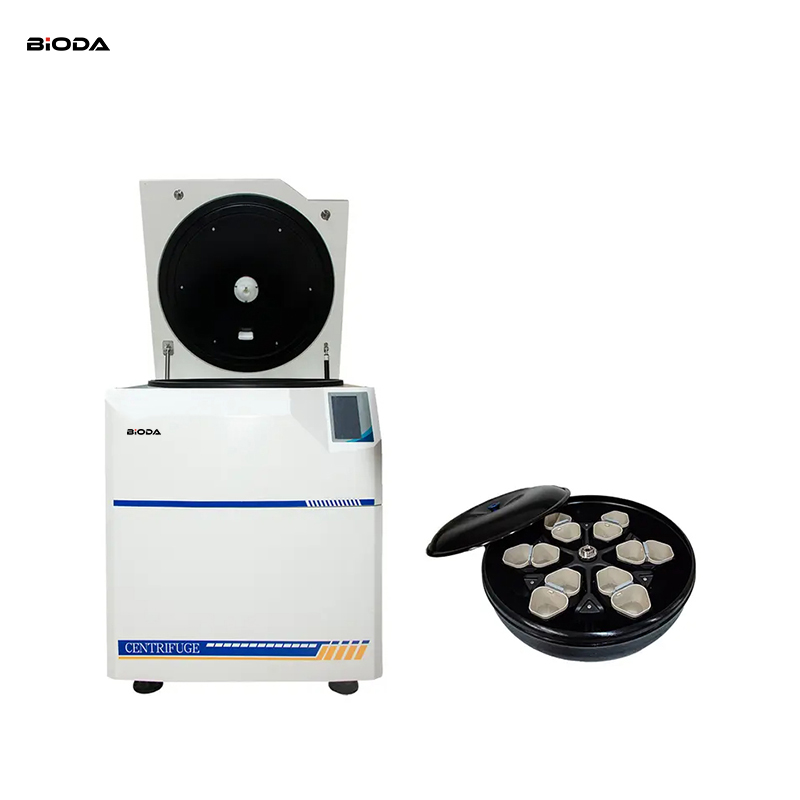
As biotechnology, pharmaceutical research, clinical diagnostics, and life science industries continue to expand worldwide, the global demand for laboratory centrifuges is growing rapidly in 2026. High-speed centrifuges, refrigerated centrifuges, and intelligent automated systems are becoming essential equipment in modern laboratories.
Industry experts believe that laboratory centrifuge technology is entering a new stage focused on automation, precision control, energy efficiency, and biosafety.
Growing Demand from Biotechnology and Pharmaceutical Industries
In recent years, the rapid growth of biotechnology and pharmaceutical manufacturing has significantly increased demand for laboratory separation equipment.
Centrifuges are now widely used in:
Blood sample separation
Cell harvesting
Protein purification
Vaccine development
Molecular biology research
Clinical diagnostics
As laboratories require faster processing and higher accuracy, high-performance centrifuges are becoming increasingly important for research efficiency and data reliability.
Intelligent and Automated Centrifuges Become Industry Trend
One of the biggest trends in the centrifuge industry is the integration of intelligent automation technologies.
Modern centrifuges now feature:
Touchscreen control systems
Programmable operation modes
Automatic imbalance detection
Real-time monitoring systems
Remote operation capability
Some advanced laboratory centrifuges can automatically adjust speed and temperature according to sample requirements, greatly reducing human error and improving operational safety.
Automation also helps laboratories:
Improve workflow efficiency
Reduce manual operation
Enhance reproducibility
Lower maintenance costs
Refrigerated Centrifuges Gain Popularity
Temperature-sensitive biological samples require stable low-temperature environments during centrifugation.
As a result, refrigerated centrifuges are increasingly used in:
Pharmaceutical laboratories
Clinical testing centers
Biotechnology research institutes
Universities and research facilities
Modern refrigerated centrifuges provide:
Precise temperature control
Faster cooling performance
Lower noise levels
Better energy efficiency
This helps maintain sample integrity and improve experimental accuracy.
Laboratory Safety Standards Continue to Improve
With stricter laboratory safety regulations worldwide, centrifuge manufacturers are placing greater emphasis on biosafety protection.
New centrifuge systems now include:
Automatic lid-lock protection
Aerosol-tight rotors
Over-speed protection
Imbalance alarm systems
Emergency braking functions
These safety features are especially important in:
Clinical laboratories
Pathogen research
Pharmaceutical production environments
Improved safety standards help reduce contamination risks and protect laboratory personnel.
Energy Efficiency and Sustainability Become Key Purchasing Factors
Environmental sustainability is becoming increasingly important in laboratory equipment procurement.
Many laboratories are now prioritizing:
Energy-saving motors
Low-noise operation
Eco-friendly refrigerants
Reduced power consumption
Manufacturers are also developing compact centrifuge designs that reduce laboratory space requirements while maintaining high performance.
This trend reflects the growing focus on green laboratory operations worldwide.
Emerging Markets Drive Global Centrifuge Industry Growth
Emerging economies such as China, India, Southeast Asia, and Latin America are rapidly increasing investments in:
Medical laboratories
Biotechnology infrastructure
Scientific research institutions
Pharmaceutical manufacturing facilities
As a result, global demand for affordable and reliable centrifuge systems continues to expand.
Chinese laboratory equipment manufacturers are also improving product quality, automation capability, and international certification standards, making them increasingly competitive in the global market.
Future Trends in Laboratory Centrifuge Technology
Industry analysts predict that future centrifuge development will focus on:
AI-assisted intelligent control
IoT-enabled remote monitoring
Higher sample throughput
Lower vibration and noise
Improved energy efficiency
Enhanced biosafety protection
Portable and compact centrifuge systems are also expected to grow in popularity for point-of-care testing and field laboratory applications.
Conclusion
The global laboratory centrifuge market in 2026 is driven by:
Biotechnology expansion
Pharmaceutical innovation
Laboratory automation
Increasing safety standards
Demand for high-precision sample processing
As laboratories continue upgrading their equipment, intelligent, efficient, and reliable centrifuge systems will play an increasingly important role in scientific research and industrial production.
For laboratory equipment manufacturers and distributors, understanding these industry trends is essential for meeting the evolving needs of modern laboratories.
← Previous: Global Laboratory Equipment Market Trends in 2026: Automation, AI, and Smart Laboratory Growth
→ Next: BioDaLab Successfully Ships Laboratory Instruments to International Customer